Disclaimer – If you are a professional or an “advanced amateur” cyclist, a seasoned trainer or simply a person that doesn’t like simplifications, you should close this site now, dress-up and go for a nice, long ride – the things I’m going to write below will get your blood boiling unneccesarily. The comments below will relate to untrained and weak-legged people, not to you.
In the previus post we discussed the basics of training according to FTP (Functional Threshold Power) and FTHR (Functional Threshold Heart Rate). Today we will tackle with the topic how to plan a training, taking into account the knowledge presented earlier.
Most of the plans, and not without a reason, require you to know what is your fitness level. In cycling world it means to know what your FTP or FTHR values are. This requires you to make a test, before you even begin to train. This approach does not have its merit. If you want to get better, you have to know first where you are currently, to measure the progress.
On the other hand, cycling tests that allow you to measure FTP require certain fitness level already. It is not easy for an untrained cyclist to tackle the easiest version of the test, where you pedal at full power for 8 minutes. Not talking even about the 20 and one hour tests, that are more accurate.
That is why I propose to start somewhere else. To start with about 4-6 week preparation period, before you take the first test. We, the amateurs, are usually far behind with pedaling technique, keeping constant, high cadence, proper breathing and generally putting our bodies under high physical stress. For the first weeks it is crucial to work on preparing your body for higher load of training it will see within next months.
No good training starts without a warm-up!
Find a basic training online that suits your needs – if its weight loss, increasing FTP or simply preparation for first ever 50km ride. Do not start with a super specialized one requiring high loads and spending long hours (more than ca. 6 hours a week) in the saddle. Enjoy the first encounter with a structured training routine. Put it into your calendar. Hang it on the fridge. Put an “x” on each one you successfully finished. Be consequent.
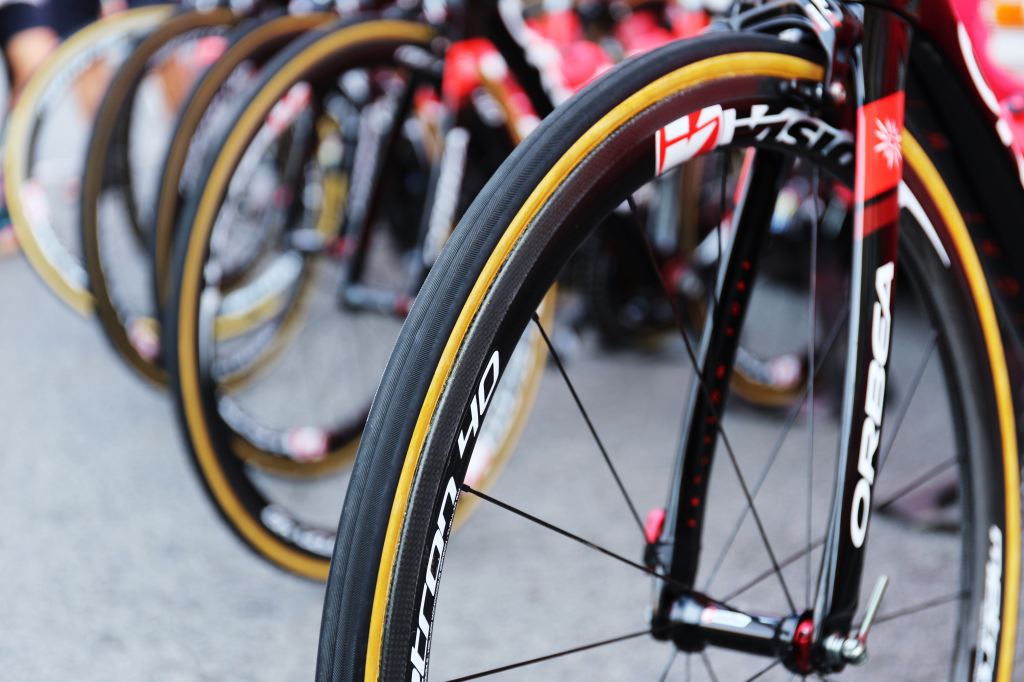
Focus on cadence – check where you limits are. The common rule is that you should be riding with about 80-90 RPM, no matter the speed. Don’t “pump” the crank, rotate it. When you are at the maximum effort, try to make it really the maximum – no putting back. Keep an eye (or rather your ear) on proper breathing. Without enough oxygen you will not be able to maintain long efforts. Breathe deeply – try do lower your heart-rate at recovery zones by this. Check how your pedal stroke looks like. How you keep your foot at various positions of the pedaling stroke. When pedaling correctly we can increase our efficiency and lower the stress on various muscle groups. Save the better trained ones for the end of the training session, when you will be tired and will need them the most. And finally – adjust your sitting position. You shouldn’t be curled behind the handlebar. You are not participating in a time trial. At least not now. In the beginning you have to be comfortable on the saddle. Legs should stretch nearly fully at the bottom position of the leg. Don’t put the saddle too high though – it’s about comfort and efficiency, but also not “dancing around” on the saddle, because you cannot reach the pedal.
Since it’s winter time now where I live, and I am not the biggest fan of outside riding on a race bike in the winter, I will be using a cycling trainer to get into shape. Maybe when one day I’ll get a gravel or a cyclocross bike it will change. But for me the slicks belong on tarmac that has at least +5 degrees Celsius.
As earlier said, the warm-up period for the proper training should take around 4/6 weeks. I have prepare then an intensive, 6 week long training schedule, consisting of various training sessions. From simple endurance building rides, up tp demanding FTP training ones. One session will mean around 60 minutes of work. No more than 4-5 times a week. This will sum up to about 25 hours on the bike in the next weeks. After that an FTP test to check where I land and what needs to be improved. Or rather on which parts the emphasis must be put, so that when the summer will come effects will be visible and felt.
I will be using TrainingPeaks for scheduling trainings. It allows to make a very simple yearly training plan, with all your goals, like races or planned long rides taken into consideration. But this is feature I will come back to after the first weeks. I highly recommend this service, as it has also a very nice and easy to use training builder, which allows you to build a training and start riding within minutes.
Let us begin then…
 Caesar's Cycling