Things happen in life. That’s a normal thing – unplanned events that destroy, force you to modify your plan. This was the case in week 4. I had to stop the training plan in the middle of the week to chase some personal obligations. This meant 1,5 week without a session on the bicycle. But there was fortunately time fo two sessions.
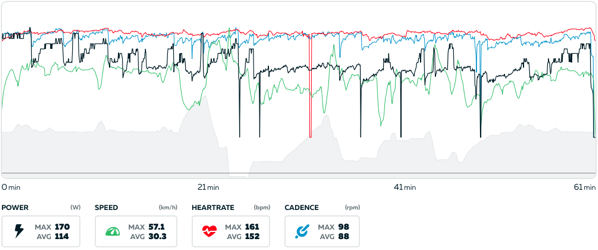
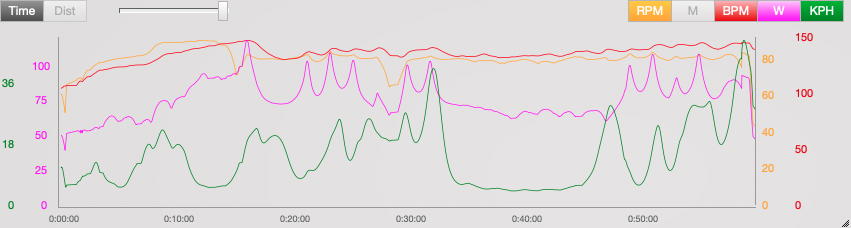
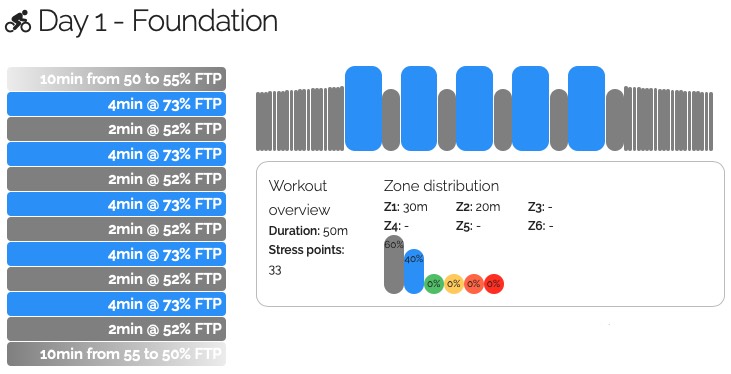
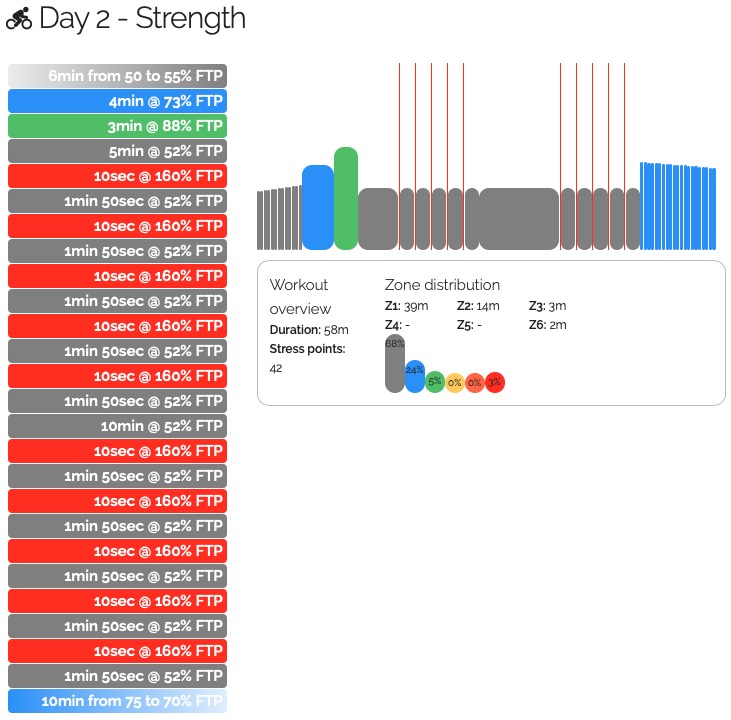
Both of them were an interesting experience – after riding on the weekend the Andy Greipel’s “Fight ALS” Ride my FTP in ZWIFT was slightly updated – that means was now at a bit higher level. Combine that with this week’s sessions increased difficulty I had quite a challenge to keep up with what the sessions have brought. You can see it especially in session 1, where my heart started pounding hard nearly from the very beginning after the warm-up and did not slow down till the very end.
Session 1
Session 2
It was a fun week and I’m looking forward to the next weeks challenges.
I am hoping that this break, though unplanned, will bring some freshness to the training when I come back. Although I were planning to do a week’s break after the whole 6-week training period will end, I will welcome this as an unexpected gift to my body.
Everyone has a goal in their training. Be stronger, faster or simply better at climbing. But when you start riding with ZWIFT, a platform strongly designed around gamification of cycling experience, you start getting other goals. Like getting a specific nice bike, or a jersey, or a sock… yes… you’ve read correctly! A sock!
The experience point system that ZWIFT provides gives plenty of carrots and motivation while riding alongside other cyclists from around the world, even professionals, at any time. Riding in ZWIFT is exciting and fun. There are five virtual worlds to explore: Watopia, Richmond, London, Innsbruck, and New York. This allows a person like myself with limited time to get up early in the morning to get a workout in to achieve health and fitness goals and to prepare for a bike racing event.
But back to the topic. In ZWIFT you can earn “sweat points” for riding in the virtual environment. Their income is dependent on various factors, like distance, track incline, etc. The more you get, the “better” bike you can purchase in the game. And what is important, you cannot buy these points with normal currency, only by cycling in the game. This means that the better bike you see under the rider, the higher the possibility that he did a lot of kilometres in the game. The bikes do give you also some perks in terms of aero and weight capabilities. With a more aero bike, you ride faster, with a lighter bike you climb the mountains easier.
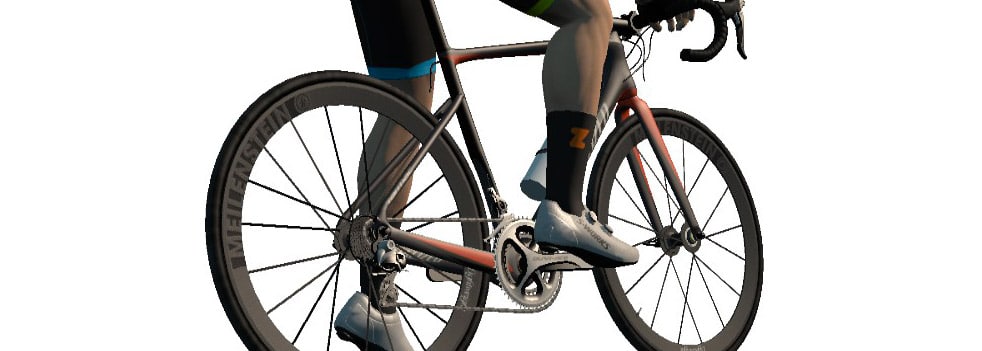
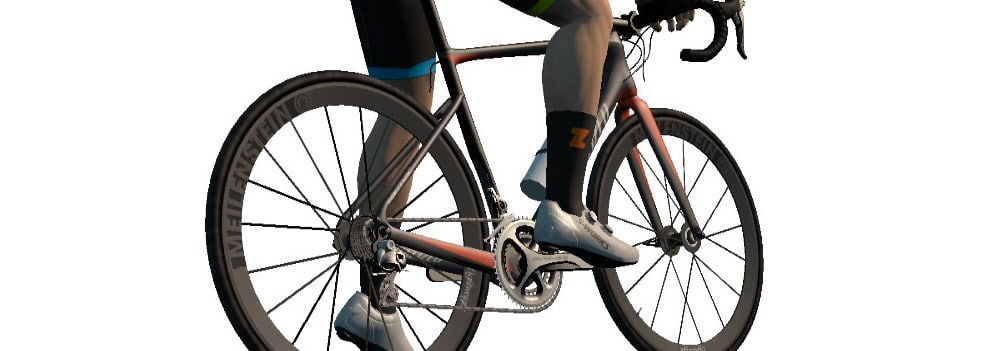
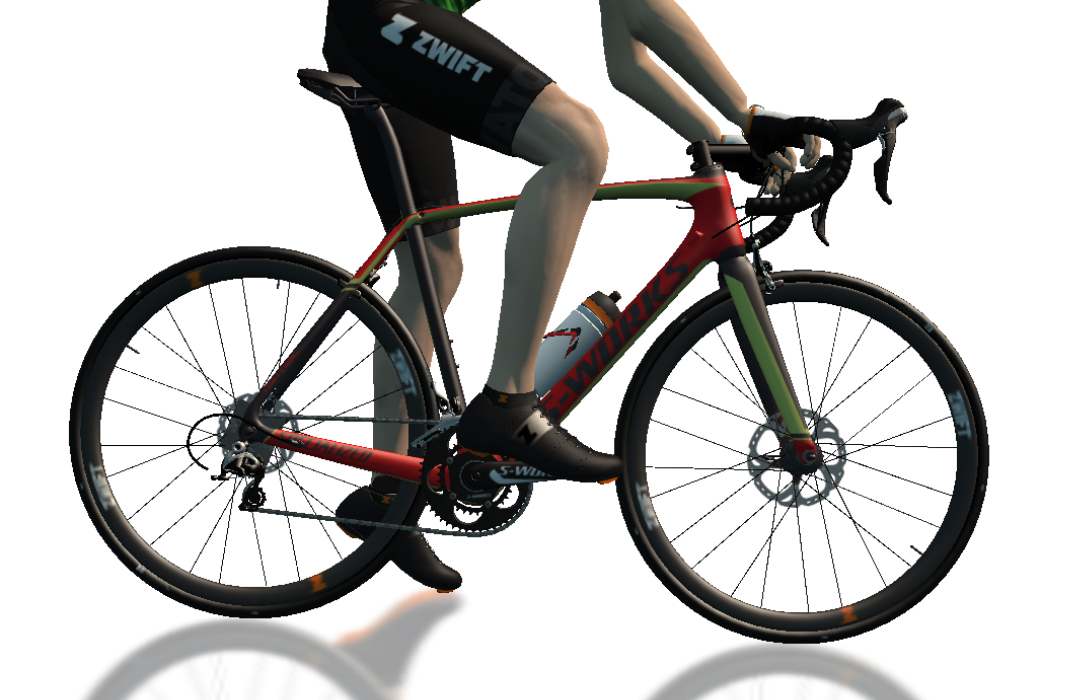
There are also special bikes you can get in ZWIFT, that are earned by achieving some special goal in the game, which you have to choose in front. Most of the people try to grab the fanciest bike of them all – the TRON bike, bo climbing really a lot. But my goal will be a bit different – to get the super climber Specialized Tarmac, earned after finishing the Ride California challenge. That means to ride around 1200km in the game.
Why exactly this one? Because it is nearly the best climbing bike in the game and I like climbing a lot. If you started the Ride California challenge at the beginning of your Zwifting, you will be very close to hitting Level 13 and unlocking the even faster Zwift Aero bike when you complete the challenge. You may have already unlocked it, depending on bonus points and other achievements received. But if you haven’t yet hit Level 13 by the time you complete the Ride California challenge and you don’t have the Trek Emonda either, the Tarmac is your fastest option. And to be honest – I just think it looks badass!
Specialized Tarmac in ZWIFT
But how much time it can take to get a decent bike in ZWIFT?
Based on that information, we see you’ll need 16000 points (XP) to hit level 10. In Zwift your speed is mainly determined by your ratio of weight/power. On the higher climb gradients your ratio of weight/power is the critical factor in determining your speed. On flats your weight is not a hindrance. Just like in real cycling outdoors.
Riding the Flat Route on Watopia gets you 206 XP for the distance alone (10,3km x 20 XP). You would also receive 10 points for completing the sprint section each lap.We can estimate you’ll get the Small Bonus power-up 1/4 of the time when you ride through the sprint or start/finish line banner. That means, on average, you’ll get an extra 10 XP every other lap – or 5 XP per lap.
Add it all up and each Flat Route lap will see you receiving 221 XP on average. If you average 35km/h you will complete a Flat Route lap in around 17:39, so approximately 20 minutes if you will get more tired. 221 XP every 20 minutes equals 663 XP per hour of riding. 16000/663 = 24,13 hours needed to hit 16000 XP. So there you have it. Just ride the Flat Route at 35km/hr for 24 hours, and you’re in.
So what does it take to reach level 12 and gain unfettered access to the Alpe and the Aero Zwift Bike? If we take a look at XP, Levels and Unlocks in Zwift Ride we see you need 23000 points (XP) to hit level 12. So how do you get those points, and just how much work will it take? Here’s one way to do it, with the numbers broken down: riding one lap of the Volcano Circuit on Watopia gets you 80 XP for the distance alone (4km x 20 XP). You would also receive 10 points for crossing the start/finish banner each lap.
We’ll keep it simple again and estimate you’ll get the Small Bonus power-up 1/4 of the time when you ride through the lap banner. That means you’ll get an extra 10 XP every fourth lap–averaging 2.5 XP per lap. Add it all up and each Volcano Circuit lap will see you receiving 82,5 XP on average. If you average 35km/hr you will complete a Volcano Circuit lap in 6:51. Let’s round that to 7 minutes as you wil get tired on the way. 82,5 XP every 7 minutes equals 707 XP per hour of riding. 23000/707=32,53 hours needed to hit 23,000 XP. And that’s your answer. Ride the Volcano Circuit route for less than 33 hours at a decent pace and you’ll hit level 12.
Then you should have enough “sweat points” to buy yourself other bikes than the Tarmac. Easy! 😉
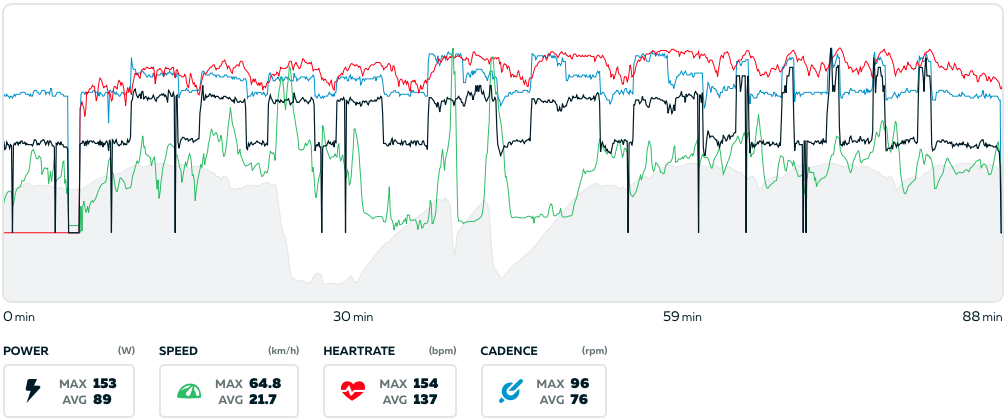
Week three – we are already warmed up and some more difficult sessions do appear in the schedule. Like the last session this week, which is the longes from all in the training plan. One and a half hour of interval cycling. What do you want more?
The body has got a bit adjusted to the training drill and all the sessions went without special problems. This is probably the calmer time before the next week’s storm, when more demanding trainings will take place.
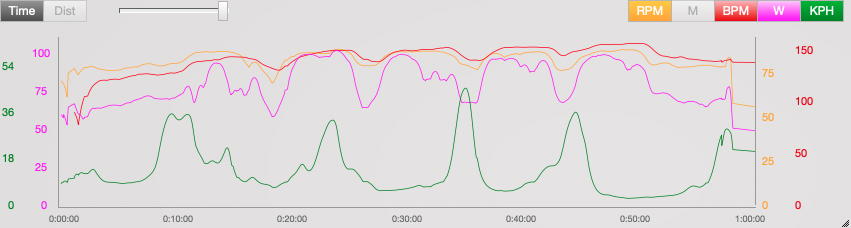
Only interesting part this week was the addition of a proper ANT+ dongle to my setup, which helped a lot with getting the speed and cadence sensors signals sorted out. Now there are very little, although not none, connectivity problems and very few drops in signal transfer. I do encounter still some 1 second drops from time to time, but they usually do not affect the way how the signal trand is moving. The response to change in pace is also quite better, allowing easier control over power output.
And here are the results (Session 1 without heartrate measurement, as the battery died on me that day):
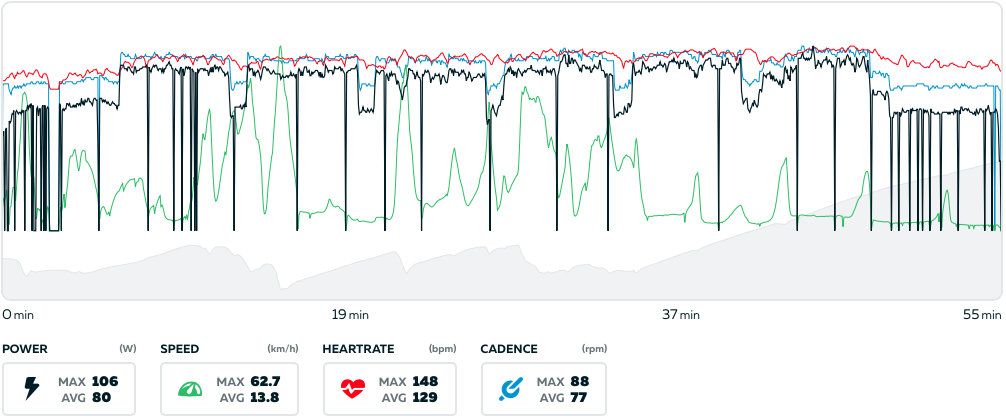
Last Saturday I joined the André Greipel ride on ZWIFT. It was my first group ride in ZWIFT. The plan was to take it easy, but at the back of my head there was a will to check how far am I with my power estimation versus the one I actually could sustain for a full hour. How did it go?
First of all maybe a short introduction what this ride was about anyway – as it was not a typical coffee ride with a famous “Pro”. It was a virtual ride on ZWIFT that was intended to raise awareness and funds for the ALS foundation that Andre has created. Amyotrophic Lateral Sclerosis, ALS in short, is a terrible disease, hitting an average 2,6 people on 100000 in Europe. It usually does affect people around 50-60 on age. And what is the most terrifying in it – there is no actual treatment to cure it, only symptomatic healing. So you can imagine it is important to raise awareness about it. With early diagnosis chances of slowing down the illness (it’ not curable currently) are higher. You can find more information on Andy’s ALS dedicated website.
Ok, back to the ride. The leader or rather the organiser of the whole event can be found on André profile at ZWIFT website. How did it look like? Phenomenal! Take a look yourself on a video from one of the riders from Saturday:
On on side it was nearly around 6000 people on their bike in front of their monitors. This gives a lot of motivation and really helps you push harder than on an usual training session. The old saying
A bad race is better than the best training
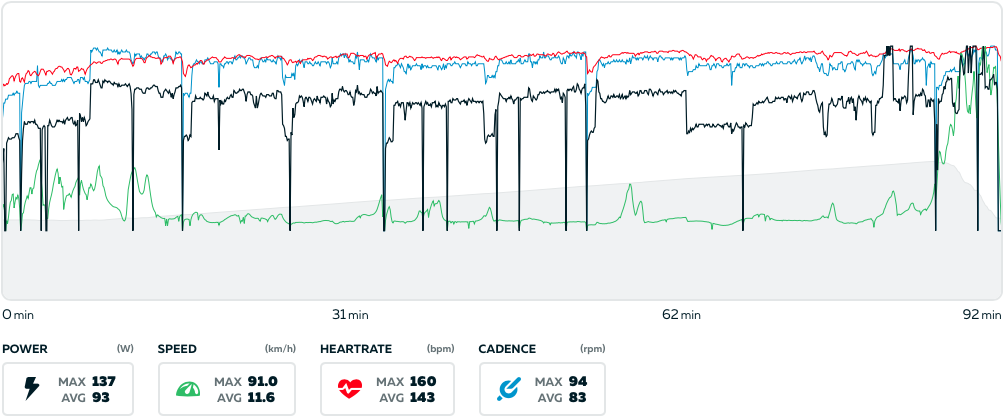
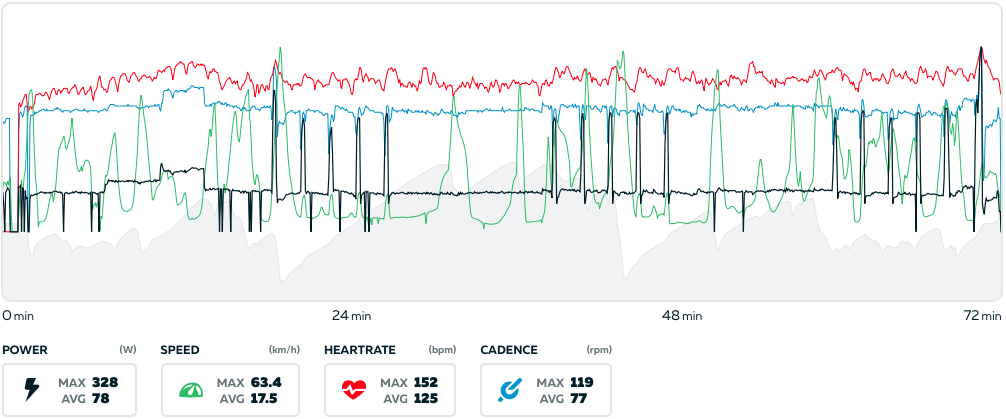
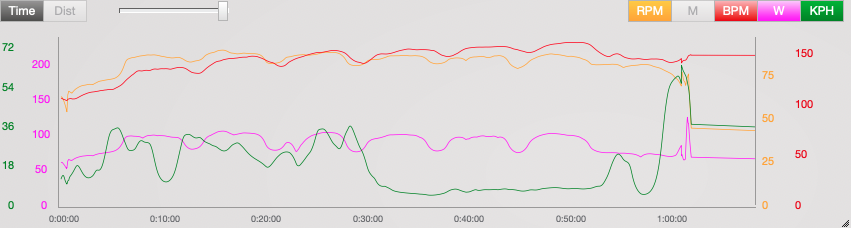
was true again. The beginning was stronger than I estimated to ride at all. I’ve caught up a group that rode around 160W FTP and continued with them for the first 20 minutes. Than unfortunately this speed and effort appeared to be too much, and despite much effort I’ve couldn’t keep up and have gradually dropped lower. The power dropped to around 100W, with periodic increases to about 130W. This reminded me of doing intervals between 100 and 130W in 2 minute / 1 minute intervals. So nothing to be proud of.
On the other side I’ve gained some confidence in riding with a larger group of riders and as I resuscitated after around next 30 minutes I came back with some more power around 140W for the last 5 minutes of the ride. A good warmup does show to be needed in my case – even if it lasts for 40 minutes.
As an conclusion – Group E with average 2-2,5W/kg is still a bit too strong for me. Which was understandable with the power generated seen before. But it was much fun and was made in a good cause so has to be counted in general as a plus.
And the ride – be the numbers:
And the end result is an increase in estimated FTP! That is something that helps a bit to restore faith in the training and progress. I thought that going through the same beginner training would be a bad decision and a waste of time. But maybe it was not… Maybe there is a sense in getting things slower at the beginning, when the season is still not quite on the horizon. There will be time to get out of the 100W league to a bit higher one. And maybe one day even to join the middle of the pack at least is such a ride.
Cover photo courtesy by Simon Connellan on Unsplash
Week two of training was quite typical for a training week – the body got quite accustomed to the fact that it will have to suffer in the evenings a bit. The legs were not sore nearly at all anymore and the eyes were ready to stare at the screen for additional hours in the evening.
Because of my work schedule I’ve got two options of training on the bike – it is either early in the morning or late in the evening. Or both. The first option is not preferred not because I cannot get out of bet in the morning, but rather because of the noise the trainer makes. I do not want to wake everyone in 10 meter vicinity from me, regardless of walls or other obstructions, at 5 A.M.. And the weather on the outside in January in AUstrian mountains is also not cyclists best friend. This leaves me with late evenings sessions on the bike. Sometimes really late, but nothing to complain about, as long as your neightbour will not knock on the wall at midnight.
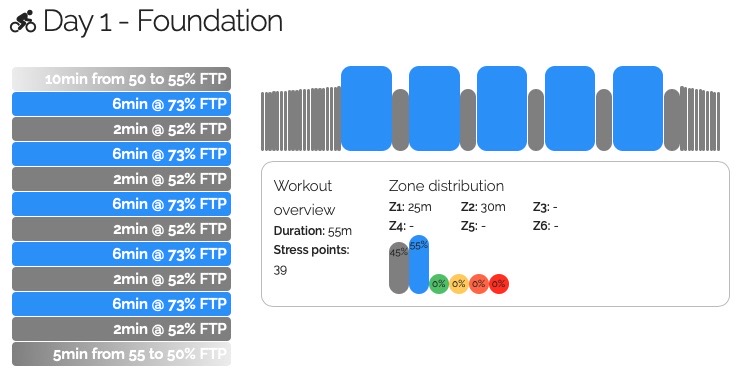
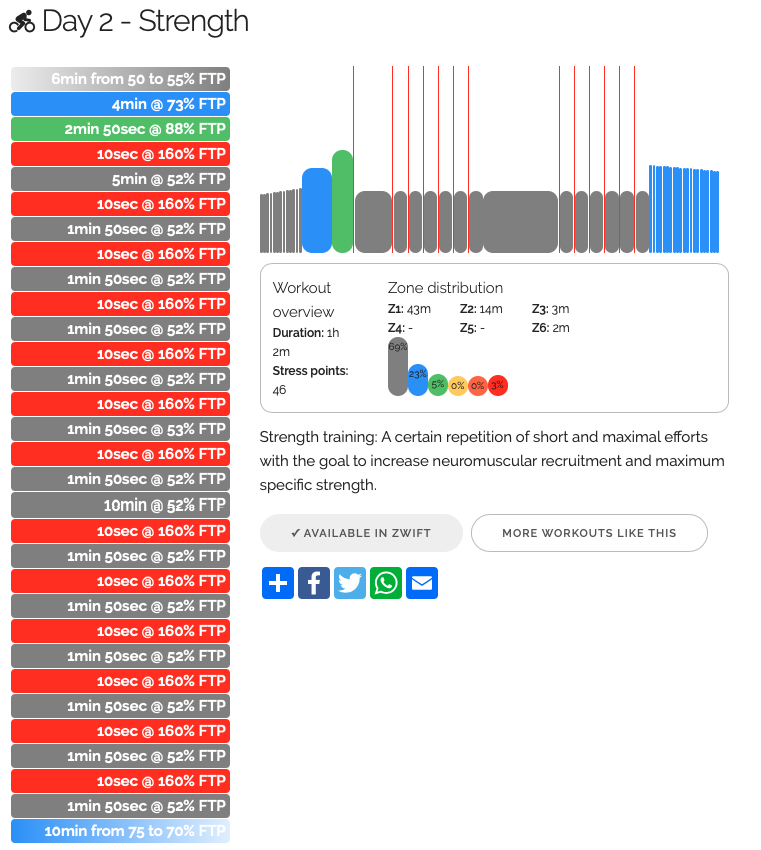
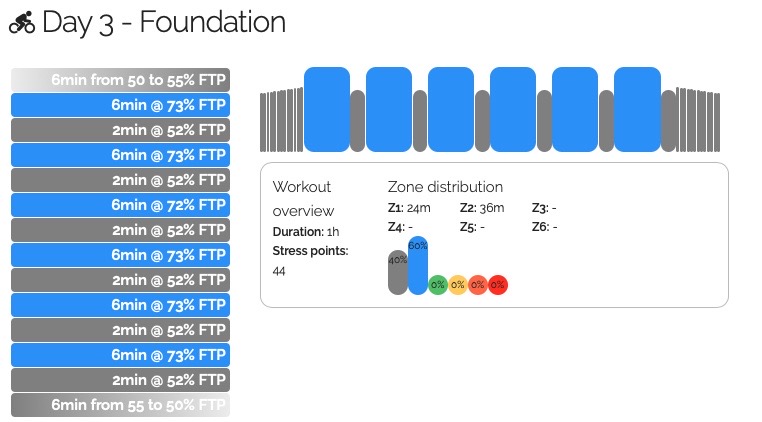
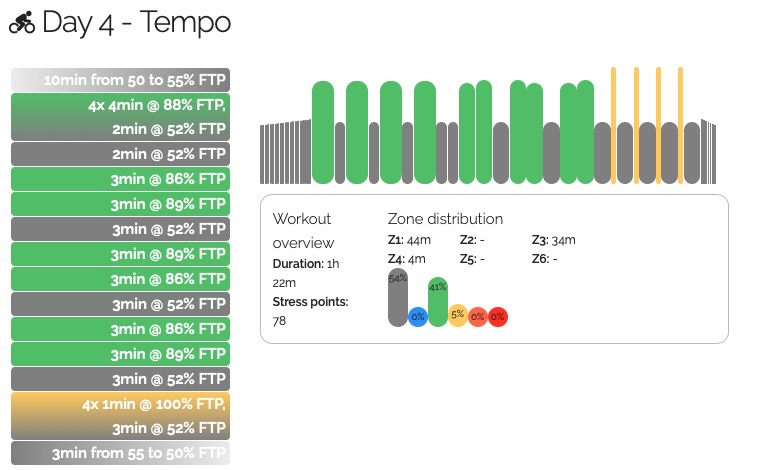
The sessions planned for this week were:
easy foundation session
strenght training with short 160% FTP intervals
another foundation session
longer tempo training session with harder intervals at the end
They all have went pretty well. No need to complain about the duration or the training load. For the foundation sessions I did actually increase the dificulty to 110%, to work a bit harder on the base strength. After the full 6 week plan will end I will have to finally force myself to make a proper FTP test to adjust the training plan to actual power output. In short intervals I do not see problems in generating large amounts of power, but keeping the power and cadence high for prelonged periods of time is still proves to be a challenge.
The last session was pretty difficult, as the legs were already a bit tired after the initial 86 and 89% FTP intervals. But that was pretty fun to get into them, as it gave new sensations to the ride finally. I can’t wait for the new week to come to try the harder sessions in practice.
The worst parts of the training are actually not the trainings themselves, but the technical difficulties. Which cause mental ones…
I encounter quire frequent speed meter communication drops with the computer, hence I stop getting the power readings. 99% of the time it does not happen when you are on your recovery interval, casually resting before the next push. It’s nearly always when you are just about to start a hard 10 second sprint, when you are on a 22% uphill in a big crowd or when you try to keep up after someone and close the gap between you. Always!
This is how you loose precious stars in ZWIFT trainings. And no stars mean less experience and slower gaining levels. This is a gamified training experience after all, so not getting what you actually earn makes you mad a bit.
Therefore I’m waiting now with much impatience for the arrival of my new ANT+ sensor, as the cable to put it close to the speed sensor is already here, and will report back on any advancements of signal strength.
Have you ever wondered how does one progress in cycling training. Or more general – how does training work at all? In a way – does every training be equal to another. Does it make a difference if you push harder or do a weekend coffee ride and have similar results? And what about you against your colleagues? Or about your version from three weeks from now?
Biggest gains are always made at the beginning of the training. Untrained “future athletes” gain strength and endurance quite quickly. The better you get the harder it will be to achieve similar results. When you will train your body for longer period of time you will notice that making visible gains will get harder and harder. The further you go into the woods the smaller result from each similar training you get. The remedy to this is to start changing your training routine, introducing new sensations to your body or if these are not possible just train longer. Although this proves not to be too efficient and does not give as meaningful results as the first two options.
I think everyone remembers their first trainings – that immediate power growth. Pain in the legs the next day, but accompanied with next session’s advancement again. With each consecutive training session you will notice that the progress made is smaller. It’s would be too easy to always have growths as a beginner. Unfortunately it gets harder with time. It can be nicely compared for example to the tabs in your internet browser. You probably are using them from long time, but not necessarily noticed how they form themselves and grow with each new opened.
When you open a new browser window and start with just one its a blank space – this is you at the first session. Full gain! You’re immediately betted then before you’ve begun. Then the second session comes and an immediate boost in form again:
Then the next sessions come and you keep getting better and better:
And then you become “saturated”. You’ve reached your average cycling fitness:
To improve even more you will have to put much more training than before, train harder, and the results will not be visible so quickly:
It will take a lot of sweat at the next sessions, but this is what distinguishes average athletes from the top ones. If you want to go beyond being average, beyond the point where you are at your 80% of capability you will have to throw a lot more on the line. I hope you remember my constant returns to the Pareto principle? 🙂
You will get approximately 80% of the result (your total possible fitness) just after putting 20% effort – and already you can call yourself a cyclist. You don’t sweat before each ride with your buddies, can do a 100km ride without not being able to move for the next 5 days because of soreness and can climb slowly and steadily any mountain you’ve got around your home.
But if you want to be better than that, you will have to give something extra. And I mean a lot “extra”. The next 20% result will show after you put 80% effort – this is where the steeper stairs start. The training sessions you did at the beginnig with high effort are easier now, but do not give much effect – you are not as tired as before even. You have to spend long hours on the saddle to get your body really tired. Or the training sessions have to be really intense. You will have to start to pay real attention to what and when you eat. How you sleep. What you do and when you do it. Invest a lot of money in the gear, coaches, massages, etc. This is how you become the champion. Even your local one.
Just take a look at the professional weightlifters – even though the whole white of this sport lifts more than 200-300kg, the best differ between each other by 2,5 or 5kg, what is just a fraction of the total %. This is what shows the best what does it take to be the best. How many factors influence the final result and great performance. Think about it – if you have what it takes and are able to sacrifice so much to have a chance to be the best one day.
After last week’s “progress” with the ZWIFT training program I’ve decided that a couple of modifications will be needed. To adjust and fine tune all software and hardware settings I choose a different, lighter training program. Also to get to know how the trainings will go and if everything hardware-wise will work correctly.
I choose to start the 6 week long beginner FTP Builder Program. Like its title says it’s 6 weeks long, with various types of training in the schedule. As I have already ridden a similarly structured program, this should be a good start for my adventure with ZWIFT. Unlike the last week’s idea…
This week consisted of four sessions – two foundation rides, a strength session and a tempo session. The foundations were a good warm-up before the tougher sessions came in, allowing to see how the system reacts an my behaviour on the bike. I did fine-tune a couple of settings in the ZWIFT app to remedy a problem I still have with the speed sensor – as it is located quite far from the laptop which receives its signal I encounter quite frequent signal does, for 3-10 seconds, which unfortunately usually means that particular intervals are not counted as successfully completed.
The technical side of ZWIFT with it’s virtual power setting is actually really intriguing. The system “estimates” the power you are putting on the pedals, based on your cadence and speed readings, when you have a supported turbo trainer. It seems to be working pretty fine, but with frequent signal losses and tire slip on the trainer roller you have to anticipate system’s behaviour – especially when approaching a short and intense interval. You may end up speeding the trainer too late for getting the correct power reading before it ends.
In my case I will be trying to use the solutions proposed on Zwift Insider website and official ZWIFT forums and install a dedicated trainer tire and add and extension cable to get the ANT+ sensor closer to the speed señor on the rear wheel. By the way I should be able to add some unnecessary extras to the setup as well.
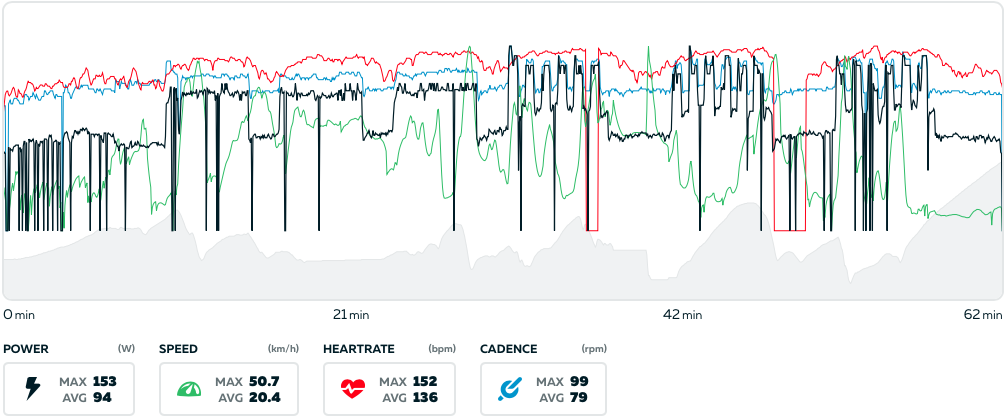
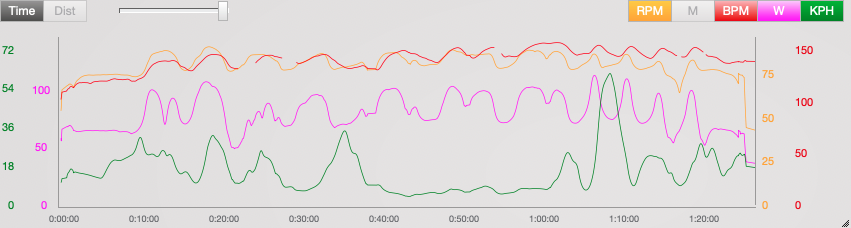
But back to this week progress – see below how did it go and how close I were to what was planned:
As you may have seen I did after the sessions finish a few minutes additional cool down, just to stretch the legs a bit more, hence the drops at the end of the sessions. What also is noticeable is that the Strength Session (Day 2) readings do not show the peaks of hard intervals at all. There are two reasons behind this – one is that on some the speed sensor did actually drop just before or at the beginning of it and second is that TrainingPeaks from which the curves are taken smoothes the curves a bit too much. For the first thing the remedies are on the way so the signal drops should be gone soon. For the second one, the smoothening of the curves has to be kept at this level, as with it being set to lover value the jumps between the reading make the curve unreadable. You will have to believe me that they are done correctly – my legs tell me so at least.
I know I have already brought to your attention the Pareto principle multiple times. I also know that listening for the 10th time over and over again on the same topic can be boring. But this is important. It is important to realise how the beginner cyclist can quickly become an ambitious, better than average cyclist. It is not going to be easy, but as I am about to show you, it is within your reach.
The Pareto principle is currently widely used among many branches, industries, theories, etc. The 20/80 principle has multiple applications, as well is applicable to cycling. It is logical as well.
Let’s assume that a world class cyclist, say Chris Froome is a 100. World class, race winning and versatile cyclist. How do you get to his level, theoretically? If we would not consider born-in abilities and rider qualities, you just have to train enough. Training makes us better cyclists. And more training even better. But how much “better”?
Well, according to the principle stated above, you have to put 20% of the effort of Chris Froome, to achieve 80% of his results. Isn’t this optimistic? Of course it it! This guy is training probably daily, doing multiple kilometres a day, leaving loads of sweat on the tarmac, eating clean and you can have 80% of what he has? That’s just insane!
But the question now is: what are those 20%? 20% of what? Well the theory says 20% of it all. So this is definitely not nothing. You will have to train properly, eat properly, lift weights, get massages done, leave a sweat mark on the tarmac not once, not twice. Read a couple of interviews on how professionals train, what they eat, what they do after training, in their homes, at the gym. Prepare yourself, that it is not laying on the couch and drinking beer in front of the TV. You will see how much effort and pain a professional athlete has to sustain. But the good news is – you have to be only 1/5th of that and you already will be really, really good in cycling.
The beginnings are always hard – this is not secret. Especially if you haven’t done too many activities for a longer time and suddenly decide that, for example, 2020 will “be your year” and “it’s time to change my life”. This kind of mentality can get you discouraged or/and injured pretty quickly. Especially if you execute the life-changing activities according to some online gurus and begin working out from day one like a pro-athlete.
Let me propose a different approach. A slower slope that will not kill your enthusiasm too quickly, but will get you stronger, faster and healthier. In the longer run.
There are fundamental principles when it comes to cycling training or for the matter of fact nearly all pieces of training. Start slowly at the beginning, warm-up the muscles, bones and joints, so they will be ready for increased load coming to them in coming weeks/months/years.
If you throw a training designed for pros on your body at the beginning you will have difficulty to perform it properly. Maybe if you are lucky you will even reach the session goals, but at a cost of great effort, your health and technique. And since the usual cause for getting into better shape is for being healthier (be it loose weight, gain muscles, get leaner, etc.), you should note force your body over its limits. At least not at the beginning. There will be time for such training later.
In case of cycling training (if you haven’t trained regularly already) you should start in the first weeks on your stamina and technique. By technique I mean to get used to various positions on the bike, how to sustain pedal strokes at various speeds (try to keep 90-100 RPM for prolonged periods of time and some power on the pedals – like 10 minutes for example), how to safely move into a standing position and come back. If you have clip-in pedals how to clip-in and out of them. This will allow you to feel more comfortable on the saddle, enjoy the rides more and be able to focus on the training requirements.
The only thing to keep an eye on is to pick a training plan suitable for your current fitness level – an FTP test made beforehand will not hurt, just to know where you currently are. The stick to it and you will see immediate improvements, over the course of weeks.
Do not let your body get used to one certain type of training if you want to become a versatile rider. Once every 8-10 maximum take a broader look at your capabilities, adjust the training plan to focus more on your weaknesses and start another training period.
In the meantime you can or rather should take a weekend coffee ride once in a while, just to see that training is not the only way to spend the time on the bike and not to forget how it is to ride just for the sake of it.
The effects you will see will be tremendous and should certainly motivate you not to stop in your efforts.











 Caesar's Cycling